 en
enUnited Arab Emirates Travel Guide

About United Arab Emirates
| Area | 83,600 km² |
| Climate | Desert climate (Hot and arid) |
| Currency | UAE Dirham (AED) |
| Language | Arabic |
| Continent | Asia |
| Elevation | 149 m |
| Time Zone | GMT+04:00 |
| Population | 11,274,311 (2025) |
| Country Code | +971 |
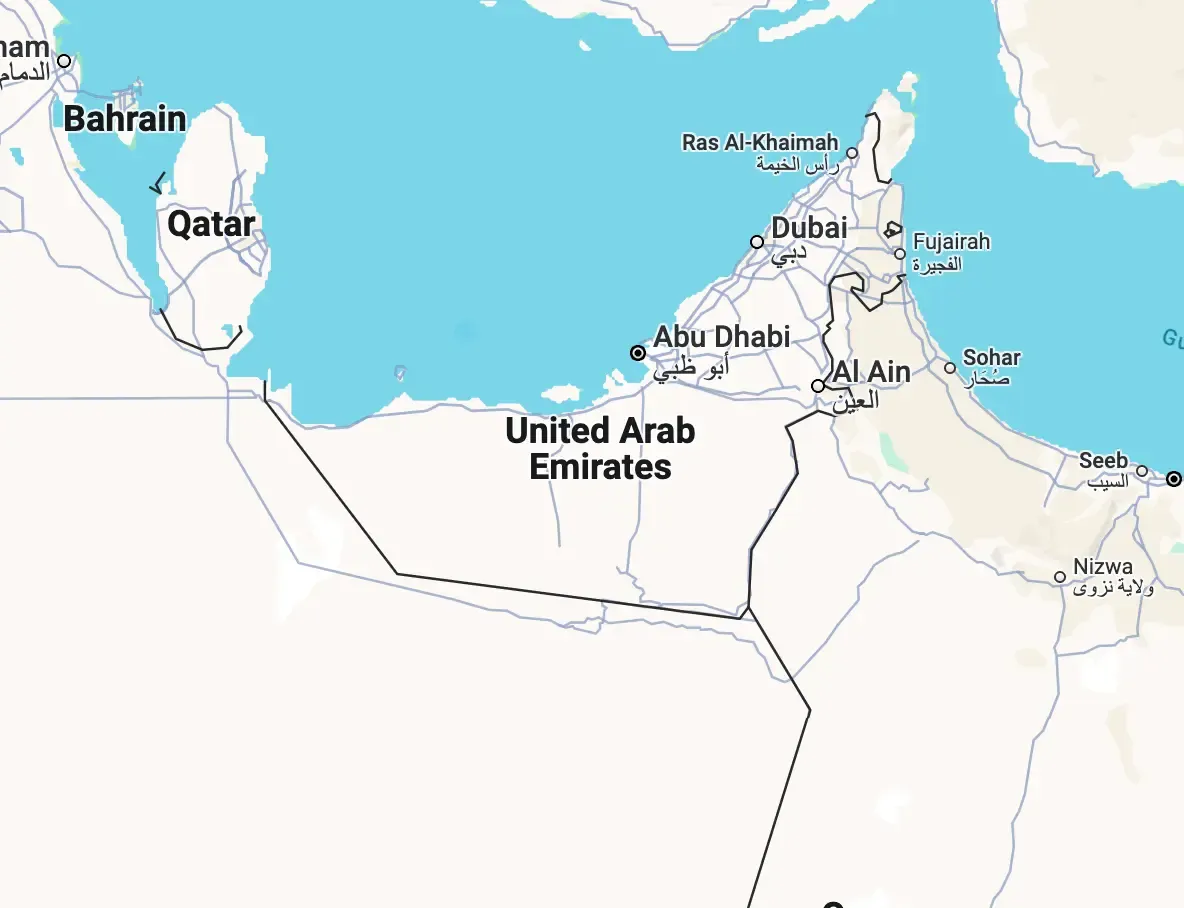
United Arab Emirates Map
How to Get to the United Arab Emirates
Located in the heart of the Middle East, the United Arab Emirates (UAE) seamlessly blends Bedouin heritage with futuristic architecture. As one of the world's premier global transit hubs, the UAE is exceptionally easy to reach by air, while its network of modern highways makes travel between emirates smooth and convenient.
Travel by Air
Flying is the most convenient way to reach the UAE, served by state-of-the-art international airports.
Dubai International Airport (DXB) & Zayed International Airport (AUH, Abu Dhabi): The country's primary gateways, receiving non-stop flights from hundreds of cities worldwide.
Sharjah International Airport (SHJ) & Dubai Al Maktoum International Airport (DWC): Popular alternative hubs often offering budget-friendly flight options.
Seamless Logistics: You can secure your UAE flight tickets on Yolcu360 in seconds and pre-book a rental car for airport pick-up to bypass taxi queues upon landing.
Travel by Road
Bordering Oman and Saudi Arabia on the Arabian Peninsula, the UAE can be accessed by car or long-distance bus from neighboring Gulf Cooperation Council (GCC) countries. Multi-lane highways offer smooth driving conditions through scenic desert landscapes.
Car Rental
Renting a car is the most efficient way to navigate iconic thoroughfares like Sheikh Zayed Road, embark on desert safari routes, or travel between emirates.
Comparison & Booking: Yolcu360 allows you to compare global and local car rental brands to secure competitive rates at Dubai or Abu Dhabi airports.
Vehicle Choices: Select a luxury sports car for urban cruising, a high-performance 4x4 for desert dunes, or a spacious SUV for family travel.
Local Cuisine & Dining in the UAE
Emirati cuisine reflects Middle Eastern, Bedouin, and Indian Ocean influences, featuring local seafood and slow-cooked meats. Owing to its multicultural population, the UAE is also a global dining hub hosting world-class international culinary venues.
Notable Dishes
Machboos (Makbus): The UAE's signature dish, consisting of basmati rice, slow-cooked meat (lamb, chicken, or fish), and local spices infused with dried lime (loomi).
Shawarma: A ubiquitous street food staple made of thinly sliced marinated meat or chicken wrapped in flatbread with garlic sauce, pickles, and fries.
Harees: A traditional dish of wheat and meat slow-cooked in earthenware pots until smooth, commonly served during Ramadan and special occasions.
Levantine Specialties: Appetizers such as hummus, falafel, tabbouleh, and moutabal form the foundation of most regional meal starters.
Sweets & Beverages
Luqaimat: Crispy fried dough balls coated in date syrup (dibs) and toasted sesame seeds.
Arabic Coffee & Dates: Traditional cardamoin- and saffron-infused coffee (Gahwa), served alongside fresh dates as a cornerstone of Emirati hospitality.
Best Time to Visit the UAE
The UAE features an arid desert climate with warm, sunny conditions throughout most of the year.
November – March (Winter): The peak travel season. Temperatures average 20–25°C (68–77°F), ideal for outdoor sightseeing, desert excursions, beach visits, and major events like the Dubai Shopping Festival.
April – May (Spring): A shoulder season with temperatures rising to 30–35°C (86–95°F). Sea temperatures are warm for swimming, accompanied by smaller tourist crowds.
June – September (Summer): Extremely hot conditions with temperatures reaching 40–50°C (104–122°F). Daily activities shift indoors to climate-controlled shopping malls, indoor entertainment complexes, and venues like Ski Dubai. Airfares and accommodation rates hit seasonal lows.
October (Autumn): A transitional month with cooling temperatures as outdoor venues begin opening for the season.
Key Facts & Overview of the Emirates
The UAE comprises seven distinct emirates, each governed by its respective ruler and offering unique economic and cultural attractions.
Emirate | Major Destinations | Primary Highlights | Major Airports |
Dubai | Downtown, Marina, Palm Jumeirah | Burj Khalifa, luxury retail, nightlife, artificial islands. | Dubai (DXB), Al Maktoum (DWC) |
Abu Dhabi | Yas Island, Saadiyat Island, Corniche | UAE capital, Sheikh Zayed Grand Mosque, Louvre Abu Dhabi, Ferrari World. | Zayed International (AUH) |
Sharjah | Al Majaz, Cultural Square | Cultural capital, heritage souks, museums, Islamic art collections. | Sharjah (SHJ) |
Ras Al Khaimah | Jebel Jais, Al Marjan | Jebel Jais peak, adventure tourism (world's longest zipline), mountain resorts. | Ras Al Khaimah (RKT) |
Fujairah | Al Aqah, Dibba | Gulf of Oman coast, scuba diving, mountain scenery. | Fujairah (FJR) |
Ajman & Um Al Quwain | Ajman Corniche, Mangroves | Coastal tranquility, traditional fishing ports, mangrove ecosystems. | Access via DXB / SHJ |
Characteristic Regional Destinations
Dubai: Known for architectural landmarks including the Burj Khalifa, indoor snow sports at Ski Dubai, and luxury resorts across Palm Jumeirah.
Abu Dhabi: Houses cultural and architectural sites such as the Sheikh Zayed Grand Mosque and Louvre Abu Dhabi on Saadiyat Island.
Ras Al Khaimah: Offers mountain outdoor activities, including the world's longest zipline on Jebel Jais.
Sharjah: Recognized as a regional cultural center featuring restored heritage areas and the Museum of Islamic Civilization.
Fujairah: Positioned along the Gulf of Oman, offering access to scuba diving and marine activities along the eastern coastline.
Important Info: When driving a rental car in the UAE (particularly in Dubai), ensure the vehicle is registered with the Salik electronic toll collection system. Toll gate charges are automatically logged to the vehicle's account and billed upon rental return.