 en
enIzmir Travel Guide

About Izmir
| Area | 11,891 km² |
| Climate | Mediterranean |
| Currency | Turkish Lira (TRY) |
| Area Code | 232 |
| Elevation | 25 m |
| Time Zone | GMT+03:00 |
| Population | 4,493,242 (2024) |
| Country Code | +90 |
| License Plate Code | 35 |
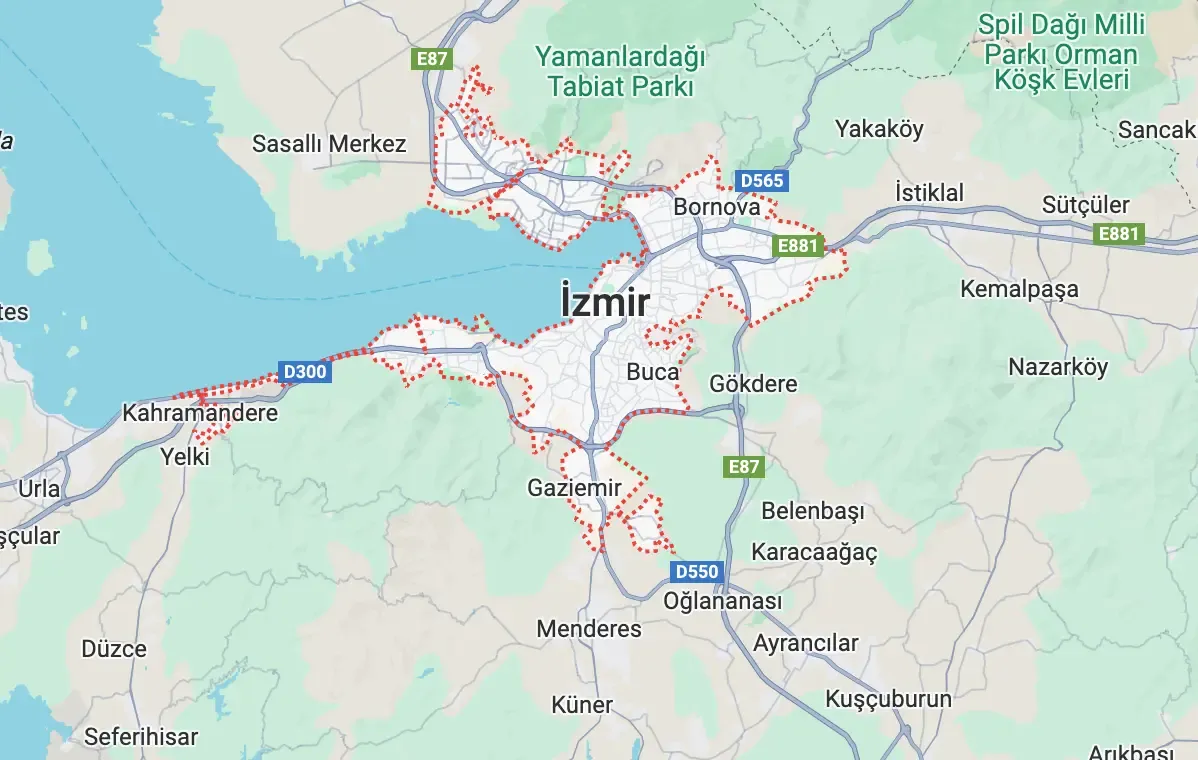
Map of Izmir
How to Get to Izmir?

Thanks to its prime location along the Aegean coast, Izmir is highly accessible by air, road, rail, and sea. Its extensive transportation network makes it an ideal year-round destination for both domestic and international travelers.
By Air
Flying is the fastest and most practical way to reach the city. Adnan Menderes Airport (ADB) is located in the Gaziemir district, approximately 17 km from the city center.
Direct Flights: ADB offers extensive direct flights from major Turkish hubs (like Istanbul, Ankara, Antalya, and Trabzon) as well as direct connections to numerous European cities.
Airport Transfers: You can easily reach the city center via HAVAŞ airport shuttles, the İZBAN commuter train network, municipal buses, or taxis. The journey to the center takes about 25 minutes.
Rental Cars: To freely explore popular coastal towns like Alaçatı, Çeşme, Urla, or historical sites like Ephesus (Selçuk), renting a car directly at the airport through Yolcu360 is highly recommended.
By Road
Izmir is well-connected to the rest of Türkiye by modern highways and a robust intercity bus network. The Izmir Intercity Bus Terminal (İZOTAŞ) is located in Bornova, about 8 km from the center, with easy metro and bus connections to districts like Konak, Alsancak, and Karşıyaka.
For those driving, the modern motorway network ensures a smooth journey:
Istanbul to Izmir: ~480 km (approx. 5 to 6 hours via the O-5 Motorway and Osmangazi Bridge).
Ankara to Izmir: ~580 km (approx. 7 hours).
Bursa to Izmir: ~330 km (approx. 4 hours).
By Sea and Rail
Sea Transit: The city boasts a robust inner-bay ferry system connecting main piers like Konak, Karşıyaka, Bostanlı, and Alsancak. During summer, seasonal ferries operate between Izmir and other coastal hubs.
Rail Transit: High-speed and regional trains connect Izmir to inland cities like Ankara, Balıkesir, and Eskişehir, terminating at the historic Basmane and Alsancak train stations. The extensive İZBAN commuter line also links the airport to the northern and southern suburbs.
Travel Tip: Izmir sees a massive influx of visitors during summer and major festivals. Booking your flights and rental car well in advance guarantees better rates and ensures vehicle availability.
Culinary Scene: What to Eat in Izmir

Izmir boasts one of Türkiye's most unique culinary landscapes, heavily influenced by Mediterranean traditions, fresh herbs, olive oil, and abundant seafood.
Boyoz: A flaky, oily pastry baked in traditional ovens, typically eaten hot for breakfast alongside a hard-boiled egg.
Kumru: A legendary local sandwich served on special sesame artisan bread, stuffed with grilled sucuk (garlic sausage), salami, and melted kaşar cheese.
Söğüş: A refreshing, traditional street food wrap made with cold cuts of lamb head meat, fresh tomatoes, onions, and parsley.
Stuffed Mussels (Midye Dolma) & Kokoreç: The ultimate late-night street food staples, commonly found along the Kordon promenade and in Karşıyaka.
Aegean Olive Oil Dishes (Zeytinyağlılar): The hallmark of Izmir's cuisine, featuring artichokes, stuffed zucchini blossoms, fava bean puree, and black-eyed pea salads.
Popular Dining Neighborhoods:
Alsancak & Kordon: Famous for upscale seafood restaurants, lively cafes, and dessert shops right on the waterfront.
Kemeraltı Bazaar: The historical heart of the city, packed with authentic artisan eateries (esnaf lokantası) and traditional bakeries.
Urla & Seferihisar: The epicenter of Aegean slow food, known for organic olive oil dishes and vineyard dining.
Alaçatı & Çeşme: Renowned for modern Aegean fusion cuisine, fine dining, and vibrant summer nightlife.
Best Time to Visit Izmir

Izmir enjoys a mild Mediterranean climate, making it an excellent destination year-round.
Spring (March – May) & Autumn (September – November): These are the most ideal times to visit. The weather is perfectly mild for exploring historical ruins, walking along the Kordon, or enjoying outdoor cafes, minus the intense summer heat and crowds.
Summer (June – August): Hot and sunny. This is peak season for coastal resorts like Çeşme, Alaçatı, and Foça. The cooling Aegean breeze (Imbat) makes the heat manageable along the coast.
Winter (December – February): Winters are mild but can be rainy. It is a quiet, atmospheric time ideal for visiting museums, historical bazaars, and thermal spa resorts in Balçova.
Key Districts & Highlights
Izmir is composed of 30 diverse districts, ranging from metropolitan centers to ancient coastal villages.
District | Highlights & Characteristics |
Konak | The historical and cultural center; home to the iconic Izmir Clock Tower, Kemeraltı Bazaar, and the Alsancak promenade. |
Çeşme & Alaçatı | The premier summer resort area on the Aegean; famous for windsurfing, boutique stone hotels, and vibrant nightlife. |
Urla | An emerging culinary destination renowned for its vineyards, gastronomy routes, and quiet coastal charm. |
Selçuk | A globally recognized historical hub; home to the ancient city of Ephesus (Efes) and the House of the Virgin Mary. |
Foça | A picturesque fishing town with historic stone houses, pristine bays, and protected Mediterranean monk seal habitats. |
Seferihisar | Türkiye’s first official "Cittaslow" (Slow City), known for organic farming, slow food, and the ancient ruins of Teos. |
Bergama | A UNESCO World Heritage site, famous for the ancient acropolis of Pergamon and rich Hellenistic history. |
Karşıyaka | A lively residential and commercial district across the bay, famous for its long coastline, modern cafes, and strong local sports culture. |
About Izmir

Often referred to as the "Pearl of the Aegean," Izmir is Türkiye's third-largest city, blending millennia of history with a distinctly modern, liberal, and laid-back Mediterranean lifestyle. From the ancient Hellenistic ruins of Ephesus and Pergamon to the cosmopolitan buzz of the Kordon waterfront, the city offers a unique contrast of old and new.
Public transportation within the city is highly efficient, utilizing a combination of ferries, modern tram lines, and the metro. However, to truly experience the wider province - from the hidden coves of Karaburun to the mountain villages of Ödemiş - renting a car is the best way to explore Izmir’s breathtaking geography at your own pace.