 en
enThailand Travel Guide

About Thailand
| Area | 513,120 km² |
| Capital | Bangkok |
| Currency | Thai Baht (THB) |
| Continent | Asia |
| Elevation | 287 m |
| Time Zone | UTC+07:00 |
| Population | 71,619,863 (2023) |
| Country Code | +66 |
| Official Language | Thai |
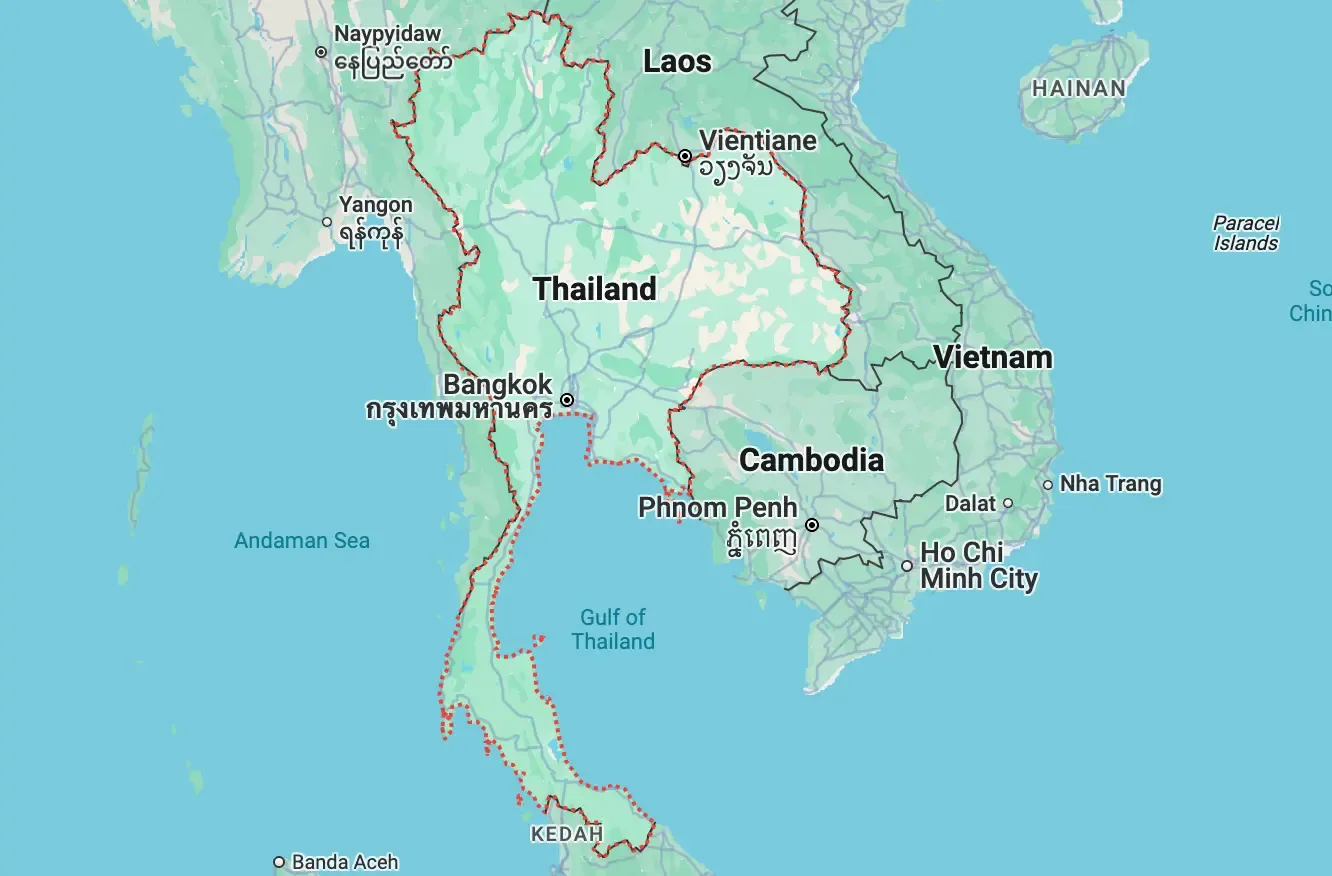
Thailand Map
How to Get to Thailand
Located in the heart of Southeast Asia, Thailand—known as the "Land of Smiles"—is a premier destination famous for its gilded temples, white-sand tropical islands, misty mountain towns, and world-renowned street food. Accessible to both luxury travelers and backpackers, the country boasts a well-developed international transport infrastructure.
Travel by Air
Flying is the most convenient way to reach Thailand, served by several major international hubs.
Suvarnabhumi Airport (BKK): Located in Bangkok, this is the country's primary international gateway, receiving direct flights from major global aviation hubs.
Don Mueang International Airport (DMK): Bangkok's second airport, primarily serving low-cost regional flights across Asia.
Phuket International Airport (HKT) & Chiang Mai International Airport (CNX): Direct options for travelers heading straight to southern beach resorts or northern mountain regions.
Seamless Logistics: You can secure your Thailand flight tickets on Yolcu360 in seconds and pre-book a rental car for airport pick-up to explore island routes or northern provinces independently.
Travel by Road and Rail
Travelers on broader Southeast Asian itineraries can access Thailand by road via border crossings with Malaysia, Cambodia, Laos, and Myanmar. Scenic train routes connecting Malaysia and Singapore to Bangkok also offer popular overland options for slow travel.
Car Rental
While public transit is recommended within dense urban centers like Bangkok, renting a car is ideal for exploring northern mountain routes (such as the Mae Hong Son Loop) or accessing secluded beaches across Phuket and Krabi.
Comparison & Booking: Yolcu360 allows you to compare international rental suppliers to secure competitive rates for pick-up at major airport terminals.
Vehicle Choices: Select an air-conditioned SUV for comfortable long-distance driving with family across tropical island and coastal highways.
Local Cuisine & Dining in Thailand
Thai cuisine is famous for balancing sweet, sour, spicy, and salty flavors. Street food markets form the core of the country's culinary culture, offering authentic dishes alongside upscale dining venues.
Notable Dishes
Pad Thai: A signature national dish featuring stir-fried rice noodles cooked in a wok with shrimp, chicken, or tofu, peanuts, eggs, bean sprouts, and tamarind sauce.
Tom Yum Goong: A savory, sour, and spicy soup prepared with shrimp, lemongrass, galangal, kaffir lime leaves, and fresh chili peppers.
Som Tum (Green Papaya Salad): A refreshing, spicy salad made with shredded green papaya, peanuts, cherry tomatoes, and crushed chilies pounded in a mortar.
Curries (Green, Red, Massaman): Coconut-milk-based curries prepared with fragrant pastes, typically served alongside steamed jasmine rice.
Sweets & Beverages
Mango Sticky Rice (Khao Niao Mamuang): Freshly sliced sweet mango served over glutinous rice and topped with warm, sweetened coconut cream.
Thai Iced Tea (Cha Yen): A sweet, cold street beverage made from brewed black tea, star anise, condensed milk, and ice.
Best Time to Visit Thailand
Thailand features a tropical monsoon climate. Travel planning generally revolves around rainfall patterns and regional festival calendars.
November – February (Peak Dry Season): The most popular period to visit. Temperatures average 28–32°C (82–90°F) with lower humidity and minimal rainfall, offering ideal weather for sightseeing in Bangkok or visiting beach destinations like Phuket and the Phi Phi Islands.
April (Songkran / Water Festival): The Thai New Year takes place in mid-April during the hottest month of the year, celebrated nationwide with public water fights and cleansing rituals.
November (Loy Krathong & Yi Peng / Lantern Festival): Celebrated during the full moon, featuring floating lotus-shaped baskets on rivers and releasing thousands of sky lanterns, particularly in Chiang Mai.
May – October (Low / Monsoon Season): Characterized by warm temperatures and frequent monsoon rains, which usually occur as brief afternoon downpours rather than all-day events. This period offers lower rates on accommodations, flights, and car rentals. (Note: The island of Koh Samui in the Gulf of Thailand experiences less rainfall during these months compared to the Andaman coast).
Key Facts & Overview of Thailand's Regions
Thailand features distinct geographical regions, ranging from urban metropolises to northern mountain ranges and southern coastal islands.
Region | Major Destinations | Primary Highlights | Major Airports |
Bangkok & Central | Bangkok, Ayutthaya, Pattaya | Grand Palace, floating markets, street food markets, historical ruins. | Suvarnabhumi (BKK), Don Mueang (DMK) |
Northern Thailand | Chiang Mai, Chiang Rai, Pai | Cool mountain climate, ethical elephant sanctuaries, White Temple, hiking trails. | Chiang Mai (CNX) |
Southern Thailand (Andaman Coast) | Phuket, Krabi, Phi Phi Islands | Limestone cliffs, emerald waters, dive sites, luxury island resorts. | Phuket (HKT), Krabi (KBV) |
Southern Thailand (Gulf Coast) | Koh Samui, Koh Phangan, Koh Tao | Full Moon Parties, scuba diving schools, yoga retreats, calm bays. | Samui Airport (USM) |
Characteristic Regional Destinations
Bangkok: A bustling metropolis where traditional sights like Wat Arun and the Grand Palace sit alongside high-rise developments and street food hubs like Khaosan Road.
Chiang Mai & Northern Highlands: Known for misty mountain terrain, historic temples, ethical elephant sanctuaries, and artisan night markets.
Gulf Coast Islands: Features Koh Phangan (famous for its Full Moon Party) and Koh Tao, a primary hub for sea turtle sightings and scuba certification.
Andaman Coast: Centered around Phuket and Krabi, offering boat excursions to the Phi Phi Islands, sea kayaking around limestone karst formations, and beachfront resort access.