 en
enNicosia Travel Guide

About Nicosia
| Area | 513 km² |
| Climate | Mediterranean |
| Currency | Turkish Lira (TRY) |
| Area Code | 392 |
| Elevation | 130 m |
| Time Zone | GMT+03:00 |
| Phone Code | +90 |
| Plate Code | - |
| Population | 173,143 (2024) |
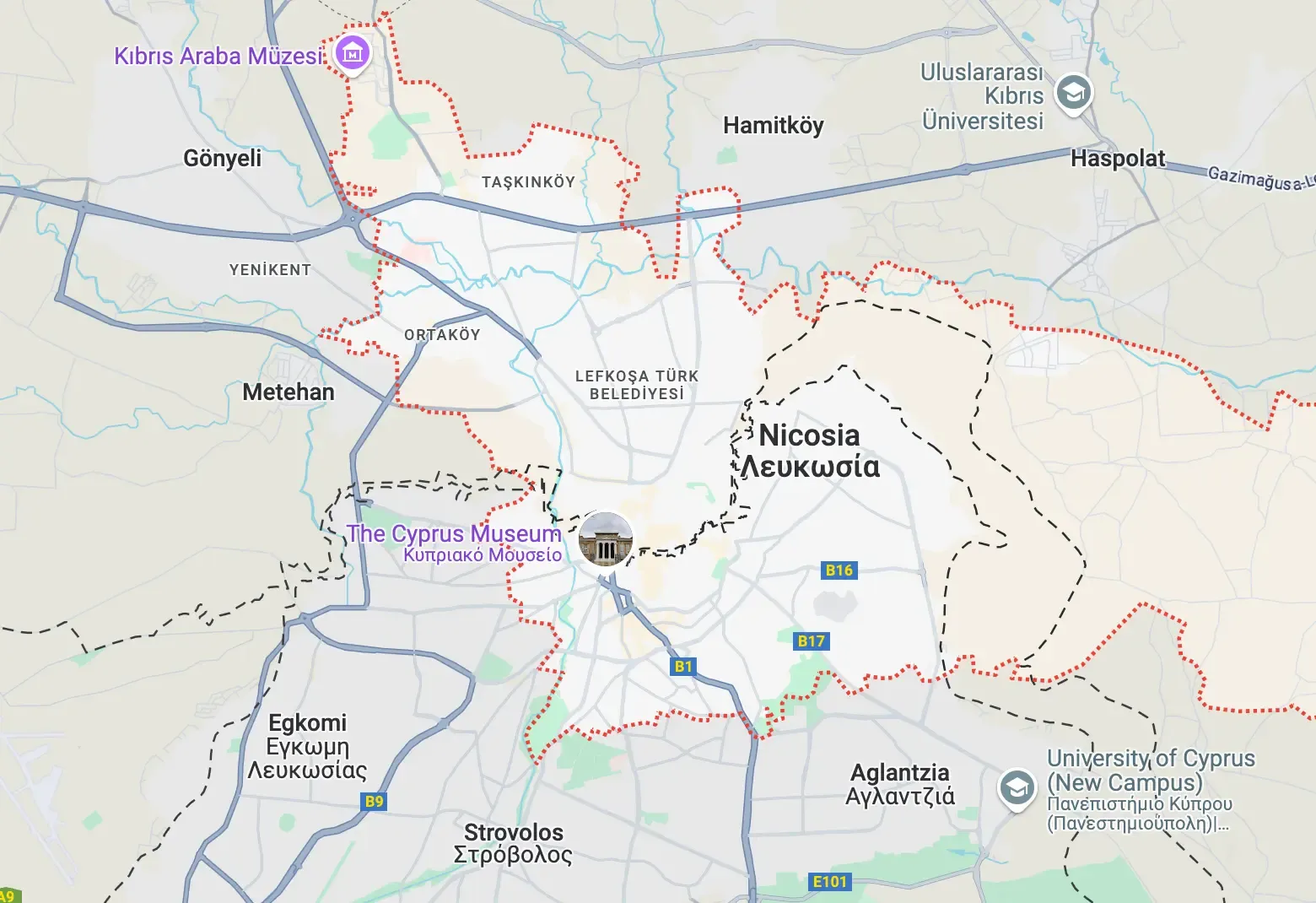
Nicosia Map
How to Get to Nicosia?
Transportation to Nicosia (Lefkoşa), the capital of the Turkish Republic of Northern Cyprus (TRNC), is highly practical through a combination of air and sea routes. Because it is an island nation, there are no direct overland or railway connections from the mainland. However, once you arrive, renting a car allows you to access every corner of the island easily. International travelers will need a valid passport to enter the TRNC, while Turkish citizens can enter using their new-generation ID cards without the need for a visa or passport.
Traveling by Air
Air travel is the fastest, safest, and most common way to reach Nicosia.
Ercan International Airport (ECN), the country's largest airport, is located approximately 23 km from the city center.
For global travelers, all flights to Ercan Airport operate as transit flights connecting through major cities in Turkey, such as Istanbul, Ankara, Izmir, and Antalya.
The flight duration from Istanbul to Nicosia is about 1.5 hours.
Upon landing at Ercan Airport, you can use KIBHAS airport shuttles, taxis, or private transfer services to reach the city center.
Traveling by Sea
If you are traveling with your own vehicle or simply enjoy the sea, ferry services are an excellent alternative.
Regular ferry and sea bus services operate from the Port of Mersin (Taşucu) in southern Turkey to the Port of Kyrenia (Girne).
Once you arrive in Kyrenia, central Nicosia is just a 30-minute (25 km) drive away.
Car Rental and Transportation Tips
Since the public transportation network in Cyprus is limited, renting a car is the most comfortable way to explore the island freely. You can easily pick up a rental car at the Ercan Airport terminal or in Nicosia's city center.
Important Warning: Traffic in Cyprus flows on the left-hand side of the road, and rental vehicles are right-hand drive.
By renting a car, you can easily create your own itinerary not only in Nicosia but also in other popular cities like Kyrenia, Famagusta, and Iskele.
Travel Advice: During the summer season and public holidays, car rental demand at Ercan Airport reaches its peak. To secure your vehicle and get the best prices, it is highly recommended to book your car weeks in advance.
What to Eat in Nicosia?
Nicosia is a gastronomically rich capital that offers a perfect synthesis of Mediterranean and Middle Eastern cuisines. Local ingredients harvested from the fertile soils of Cyprus meet centuries-old recipes to create mouth-watering dishes.
Famous Local Flavors
Peach Kebab: Despite the name, it contains no peaches! It is a legendary Cypriot delicacy made from a special mixture of minced meat and spices wrapped in caul fat and grilled over charcoal.
Molehiya: A characteristic, savory stew of Arabic origin made with dried molehiya leaves and cooked with lamb or chicken.
Baked Macaroni: Thick-cut pasta baked with a special minced meat filling and plenty of halloumi cheese.
Cypriot Meatballs: Traditional meatballs made by adding grated potatoes to the mix, resulting in a crispy outside and a soft inside.
Breakfast Culture and Halloumi
Halloumi Cheese: The undeniable star of Cypriot cuisine is a breakfast staple. It is usually served grilled or pan-fried.
Olive and halloumi bread (fırın çöreği) is the source of the delicious aromas wafting from Nicosia's bakeries in the early morning hours.
In cafes around Dereboyu and Gönyeli, you can experience a rich, traditional Cypriot breakfast spread enhanced with fresh Mediterranean greens and local cheeses.
Traditional Home Cooking
Pirohu: A traditional dough dish similar to ravioli, but filled with fresh nor (curd) cheese instead of meat, topped with grated halloumi.
Kolokas (Taro): A root vegetable unique to Cyprus, similar to a potato but sweeter and denser. It is usually cooked as a stew with chicken or lamb.
Mücendra Pilavı: A filling side dish where green lentils and rice meet caramelized onions.
Sweets and Macun (Preserves) Culture
Ceviz Macunu (Walnut Preserve): The most special dessert offered to guests in Cyprus. It is made by boiling fresh, green walnuts with cloves and syrup for a long time.
Gullurikya: A special pastry dessert boiled in carob molasses.
Kırkkat (Ekmek Kadayıfı): A satisfying, syrup-soaked traditional dessert served with a thick layer of curd cheese in the middle.
Popular Dining Areas
Walled City (Surlariçi): The best destination to taste traditional Cypriot dishes and mezes in authentic restaurants hidden among historic inns and narrow streets.
Dereboyu (Mehmet Akif Avenue): Nicosia’s most modern street, gathering international restaurant chains, luxury cafes, and new-generation burger joints.
Gönyeli: One of the most famous districts on the island, particularly renowned for its Şeftali kebab, oven-baked kebabs, and meat restaurants.
When to Visit Nicosia?
Nicosia has a typical Mediterranean climate. While it is open to visitors year-round, certain months stand out for optimal travel comfort.
Spring (March to May): The ideal time to explore Nicosia. Temperatures hover around 20-25°C, allowing you to comfortably walk through the historic streets of the Walled City without the sweltering heat.
Summer (June to September): Temperatures in the city frequently exceed 40°C. Because Nicosia is inland and not on the coast, the combination of heat and humidity can be overwhelming. If traveling in summer, it is best to schedule museum visits for midday and outdoor explorations for the late afternoon.
Winter (December to February): Winters are mild and occasionally rainy. This is an attractive period for those seeking a quiet, budget-friendly cultural trip.
Key Areas and Neighborhoods of Nicosia
Nicosia features a dynamic structure that blends historical heritage with modern living spaces. Every district in the city hosts a different atmosphere and cultural texture.
Walled City (Surlariçi): The heart and historical center of the city. Surrounded by Venetian Walls, this area houses major historical landmarks like the Büyük Han (Great Inn), Selimiye Mosque, and Bandabuliya (Municipal Market).
Dereboyu (Köşklüçiftlik): Known as the most upscale district of Nicosia. It represents the modern face of the city with its boutiques, popular cafes, and entertainment venues.
Gönyeli: A large municipality merged with Nicosia. It is both a heavily populated residential area for locals and a very rich spot for gastronomy.
Taşkınköy: A bustling and central neighborhood known for its developed shopping streets, boutiques, and local artisans.
Küçük Kaymaklı: One of the city’s rapidly growing districts on the road to Ercan Airport, where residential and commercial areas intertwine.
Ortaköy: An administrative and commercial hub with heavy daily traffic, home to ministries, schools, and large hospitals.
About Nicosia
Nicosia holds the title of the last divided capital in the world, serving as the cultural, political, and economic center of the Turkish Republic of Northern Cyprus (TRNC). The Green Line, which runs through the middle and divides the city into North and South, is under United Nations control and remains one of the most striking historical realities of the city.
Offering a unique architectural mosaic from the Lusignan, Venetian, Ottoman, and British periods, Nicosia is an open-air museum for history enthusiasts. The Selimiye Mosque (formerly St. Sophia Cathedral), which is one of the finest examples of Gothic architecture; the Büyük Han, reflecting the grandeur of the Ottoman era; and the historic Kyrenia Gate (Girne Kapısı) guarding the city are must-see landmarks.
The city draws attention not only with its history but also with its vibrant social life. The restored narrow streets of the Walled City are now filled with art galleries, boutique cafes, and live music venues. You can buy traditional Cypriot handicrafts and souvenirs at the Arasta Bazaar, and witness history up close at the Ledra Street (Lokmacı) border crossing. With its strong cultural texture, warm-hearted people, and rich gastronomy, Nicosia will be one of the most unforgettable stops on your Cyprus journey.