 en
enLarnaca Travel Guide

Information About Larnaca
| Area | 31 km² |
| Climate | Mediterranean Climate |
| Currency | Euro (EUR) |
| Area Code | 24 |
| Elevation | 26 m |
| Time Zone | UTC+2 (Summer: UTC+3) |
| Population | 84,000 (2024) |
| Country Code | +357 |
| License Plate Code | L |
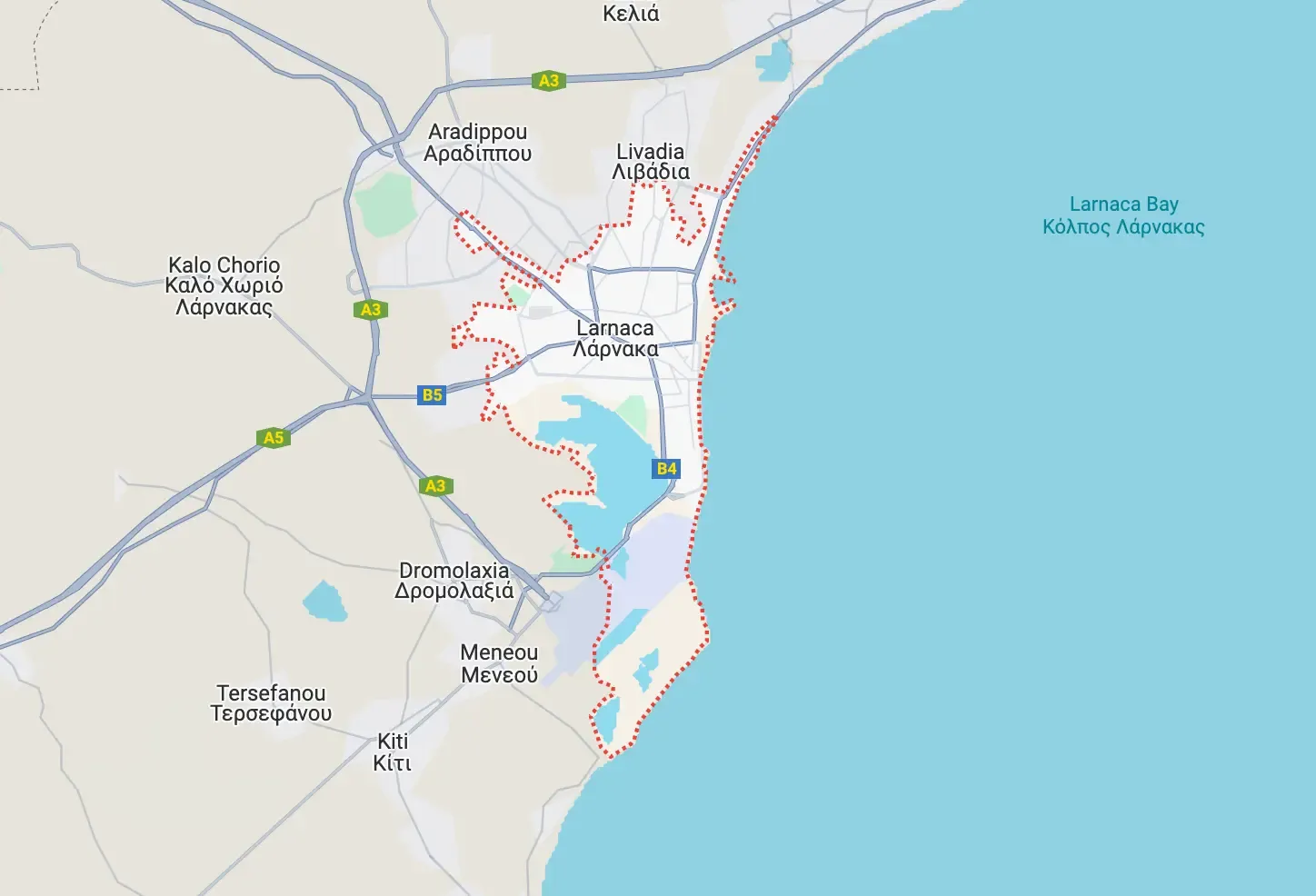
Larnaca Map
How to Get to Larnaca?
Located on the southern coast of the island, Larnaca is one of the most important tourism and transportation hubs of the Republic of Cyprus. As a global traveler, your entry requirements will depend on your nationality. EU citizens can generally enter with a valid national ID card, while non-EU travelers will need a valid passport. Depending on your country of origin, you may also require a national Cyprus visa or a valid multiple-entry Schengen visa to enter the Republic of Cyprus.
Traveling by Air
The heart of transportation to the city is Larnaca International Airport (LCA), the largest and busiest airport in the country.
Larnaca serves as the primary international gateway to the island. You can easily find direct, year-round flights from major European cities, the UK, and the Middle East via both legacy carriers and low-cost airlines.
Once you land at Larnaca Airport, reaching the city center (Finikoudes) is incredibly easy—it is only a 15-minute drive away.
You can step right outside the terminal to catch a local bus, take an airport taxi, or use a pre-arranged private transfer service to reach your accommodation.
Traveling by Sea
While air travel is the most common and practical method, the island is also accessible by sea. Larnaca is a popular port of call for Mediterranean cruise ships. Additionally, during the summer months, seasonal ferry services operate between Greece (Piraeus) and Cyprus, offering a scenic maritime alternative for those who prefer slow travel.
Car Rental and Transportation Tips
Renting a car is undoubtedly the most comfortable way to freely explore Larnaca, the magnificent surrounding beaches like Ayia Napa and Protaras, or the scenic Troodos Mountains. You will find numerous global and local car rental desks right inside the Larnaca Airport terminal.
Important Warning: Just like the rest of Cyprus, traffic in Larnaca flows on the left-hand side of the road, and vehicles are right-hand drive.
By renting a car, you are not limited to Larnaca; you can easily reach other popular destinations such as Limassol, Paphos, and Ayia Napa via a modern, well-maintained highway network.
Travel Advice: During the summer season (especially July and August), the massive influx of tourists from across Europe makes finding an available rental car on the spot quite difficult. Booking your car weeks in advance will both protect your budget and eliminate the risk of being left without a vehicle.
What to Eat in Larnaca?
Larnaca is a fantastic gastronomic destination where Mediterranean and Greek cultures blend perfectly, with fresh seafood and olive oil dishes taking center stage.
Famous Local Flavors
Souvlaki: A famous Greek/Cypriot skewer, usually made from pork or chicken, served inside warm pita bread with fresh onions, tomatoes, parsley, and tzatziki.
Kleftiko: A mouth-watering dish made of lamb, potatoes, and herbs, slow-cooked in traditional clay ovens for hours until the meat is tender enough to fall right off the bone.
Moussaka: A hearty Mediterranean classic made by baking layers of eggplant, minced meat, and potatoes topped with a thick, creamy béchamel sauce.
Fish Meze: Highly popular in the restaurants along the Larnaca coast, this is a tasting menu consisting of 15 to 20 different small plates featuring calamari, octopus, shrimp, and the fresh catch of the day.
Breakfast Culture and Halloumi
Just as it is across the whole island, Halloumi cheese is the crown jewel of the cuisine in the south. Grilled halloumi paired with local olives, fresh tomatoes, and rustic village bread is an absolute breakfast essential. Starting the day at a local Larnaca cafe with a traditional Cyprus Coffee or a refreshing, ice-cold Frappe is also highly popular.
Sweets and Desserts
Loukoumades: Hot, bite-sized dough balls that are crispy on the outside and soft on the inside, heavily drenched in honey syrup and sprinkled with cinnamon.
Daktyla: Translating to "ladies' fingers," these are traditional fried pastries filled with almonds, cinnamon, and sugar, then dipped in sweet syrup.
Popular Dining and Entertainment Areas
Finikoudes (The Palm Tree Promenade): This is Larnaca's most iconic avenue. Chic restaurants, cafes, and international chains line this vibrant coastal strip.
Mackenzie Beach Area: This is the city's top hotspot for those seeking high-end seafood restaurants, stylish beach clubs, and a vibrant nightlife.
Piale Pasha Avenue: Stretching from Finikoudes down to Mackenzie, this scenic coastal road is packed with authentic traditional fish taverns.
When to Visit Larnaca?
Larnaca enjoys a typical, mild Mediterranean climate. Boasting around 300 days of sunshine a year, the best time to visit depends entirely on what kind of holiday you are looking for:
Spring and Autumn: The ideal periods for exploring Larnaca, going on nature walks, and swimming in the sea without being exposed to overwhelming heat.
Summer (June to September): The peak season for those seeking a sea, sand, and sun holiday coupled with lively nightlife. However, temperatures in July and August can be intensely hot and humid.
Winter (December to February): Winters are mild and occasionally rainy. It is a relaxing period, especially for those looking for a quiet cultural holiday and the chance to watch the migrating flamingos at the Salt Lake.
Key Areas and Neighborhoods of Larnaca
Finikoudes: The heart of the city, famous for its palm-lined promenade. With its beach, restaurants, and cafes, it is the liveliest district in Larnaca.
Mackenzie: Located very close to the airport, this area dictates the city's rhythm with beach clubs during the day and bustling entertainment venues at night.
Skala (The Old Turkish Quarter): Situated just behind the Larnaca Castle, this is a fascinating neighborhood that reflects the city's historical texture with its narrow streets, old ceramic workshops, and authentic architecture.
The Salt Lake Area: A natural wonder surrounded by long walking trails, serving as a winter home to thousands of vibrant pink flamingos.
About Larnaca
As one of the oldest continuously inhabited settlements in Cyprus (anciently known as Kition), Larnaca seamlessly blends thousands of years of historical heritage with the relaxed atmosphere of a modern coastal city. The city is home to sacred sites that are deeply revered by both the Christian and Islamic worlds.
The Hala Sultan Tekke, an important pilgrimage site in the Islamic world, sits beautifully on the shores of the Larnaca Salt Lake. Meanwhile, the Church of Saint Lazarus, rising in the city center and dazzling visitors with its magnificent Byzantine architecture, is the city's most significant Christian landmark. The historic Larnaca Castle, originally built to defend the city from maritime threats, now serves as an elegant divider connecting the Finikoudes promenade to the Skala district.
With its shallow and warm seas, miles of sandy beaches, accommodation options for every budget, and a deeply relaxed Mediterranean lifestyle, Larnaca is a fantastic destination where you will collect unforgettable memories during your Cyprus journey.