 en
enCyprus Travel Guide

About Cyprus
| Area | 9,251 km² |
| Climate | Mediterranean |
| Currency | TRY (TRNC), EUR |
| Language | Turkish, Greek |
| Continent | Asia, Europe |
| Elevation | Average 91 m |
| Time Zone | GMT+03:00 (TRNC) / GMT+02:00 |
| Phone Code | +90 (TRNC) / +357 |
| Population | 1,244,188 (2024) |
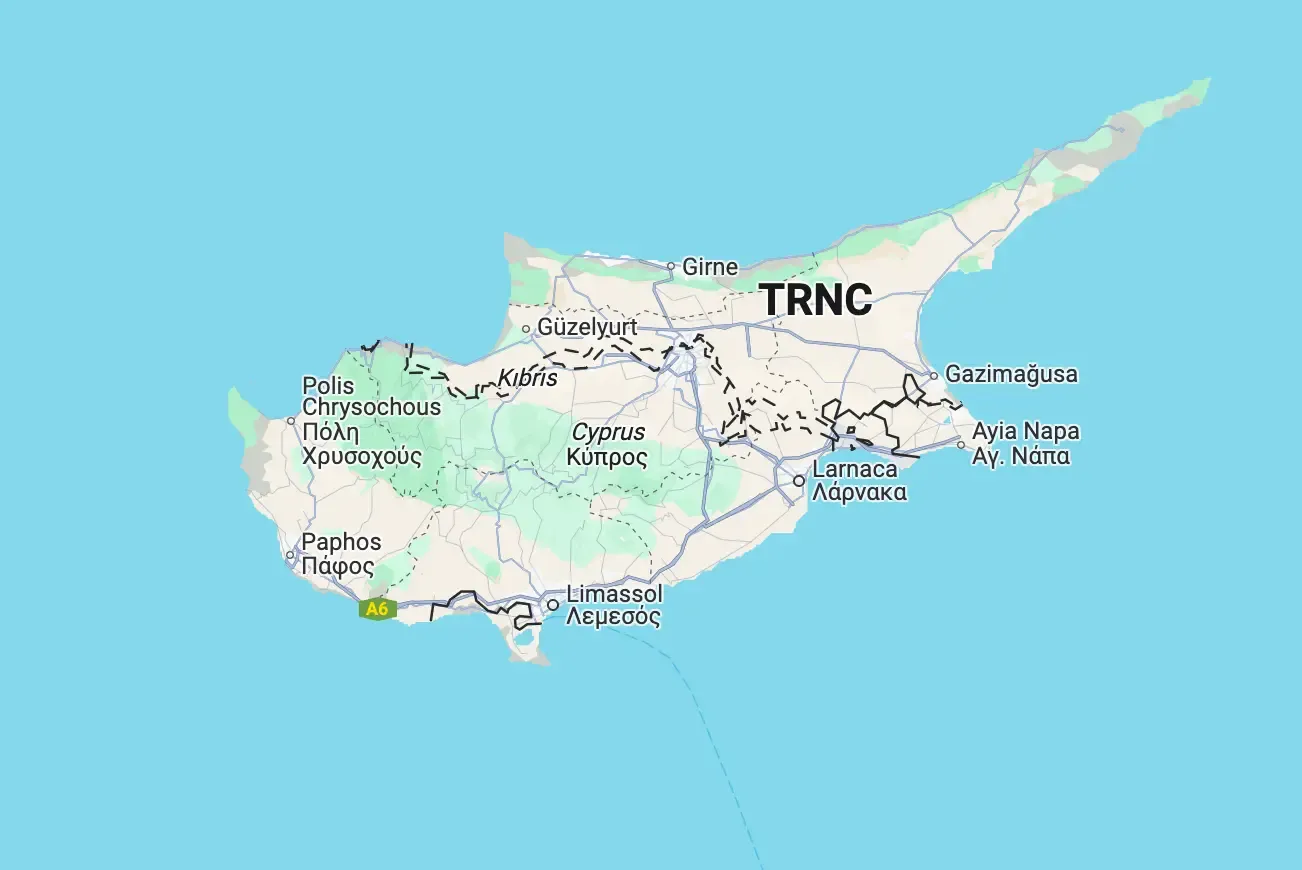
Cyprus Map
How to Get to Cyprus?

Cyprus is highly accessible from all over the world, with multiple international airports and sea routes. As a global traveler, you will need a valid passport to enter the island, and depending on your nationality, you may also need to check visa requirements for your specific point of entry (Northern or Southern Cyprus).
Traveling by Air
Larnaca (LCA) and Paphos (PFO) Airports: These are the primary gateways for international travelers heading to the Republic of Cyprus (South). You can find direct flights from major European and Middle Eastern cities year-round.
Ercan Airport (ECN): If you are traveling to Northern Cyprus, Ercan Airport is your main hub. All flights to Ercan operate as transit flights connected through major cities in Turkey, such as Istanbul or Antalya.
No matter where you land, you can book your flight tickets on Yolcu360. By reserving your airport car rental in advance, you can hop into your vehicle right at the terminal and start exploring the island without waiting for transfers.
Traveling by Sea
If you prefer a scenic Mediterranean journey, ferry and sea bus services operate regularly from Turkey’s southern ports (Mersin and Alanya) to Kyrenia (Girne) and Famagusta (Gazimağusa) in Northern Cyprus.
Car Rental in Cyprus
Since public transportation is quite limited in Cyprus, the only way to make your holiday truly comfortable is to rent a car.
On Yolcu360, you can compare all global and local rent a car companies to find your vehicle at the best prices.
From Kyrenia to Karpaz, and Nicosia to Famagusta, a rental car will be your best travel companion for discovering every hidden cove of the island on your own route.
What to Eat in Cyprus?

Cypriot cuisine is a massive feast blending Mediterranean and Middle Eastern cultures, letting you taste the sun in every bite.
Highlighted Flavors
Halloumi Cheese: The registered trademark of the island. Whether grilled or fresh, it is the star of every meal from breakfast to dinner.
Şeftali Kebab (Peach Kebab): Contrary to its name, it contains no fruit! Wrapped in caul fat with a special filling, this kebab is the culinary symbol of the island.
Molehiya: A slightly sour and appetizing meat dish made with a special plant that grows exclusively in this region.
Pirohu: A type of ravioli filled with fresh halloumi or curd cheese, topped with dried mint.
Cypriot Mezes: Hummus, tzatziki, fava, and especially "çakıstes" (cracked green olives) are indispensable on the table.
Sweets and Snacks
Walnut Paste (Ceviz Macunu): A symbol of Cypriot hospitality, this dessert is made from fresh green walnuts prepared using a special method.
Zivania and Coffee: Complete your meal with a traditional Cypriot coffee roasted over embers or a classic island drink.
When to Visit Cyprus?

With an average of 300 days of sunshine a year, Cyprus is truly a year-round destination.
March to May: The ideal time when nature awakens, everywhere is lush green, and the weather is neither too hot nor too cold. Perfect for nature walks and historical explorations.
June to September: The ultimate sea and entertainment season! Although temperatures can reach 35-40°C, the cool Mediterranean waters and massive hotel pools make for an unforgettable summer holiday.
October to November: The "second spring" of Cyprus. The sea is still warm, but the scorching summer heat gives way to gentle breezes. The best choice for those seeking a peaceful vacation.
December to February: Snow is almost never seen. It is a budget-friendly period for those looking for tranquility, cultural tours, and spending time in casinos.
Geographical and Administrative Structure of Cyprus
Due to its historical and political structure, the island of Cyprus is divided into two main regions: North and South. Knowing what experience each region offers will help you plan your trip and choose the right transportation and car rental options.
City / Region | Location | Highlighted Feature | Nearest Airport |
Nicosia | North & South | The world's last divided capital, Walled City | Ercan (North) / Larnaca (South) |
Kyrenia | North | The heart of tourism, Historic Harbor, Castles & Monasteries | Ercan Airport |
Famagusta | North | Golden beaches, Ancient City of Salamis, Varosha | Ercan Airport |
Iskele | North | Long Beach coastline, fishing villages | Ercan Airport |
Morphou | North | Citrus groves, Ancient City of Soli | Ercan Airport |
Lefka | North | Ecological farming, mining history, slow city (Cittaslow) | Ercan Airport |
Larnaca | South | Salt Lake, Hala Sultan Tekke, Palm-lined coast | Larnaca Airport |
Paphos | South | UNESCO Heritage mosaics, Aphrodite's Rock | Paphos Airport |
Limassol | South | Modern marina, wine festivals, carnivals | Larnaca Airport |
Ayia Napa | South | Nightlife and the famous Nissi Beach | Larnaca Airport |
Cyprus Exploration Guide by Region
When exploring the island of Cyprus, it is important to choose regions based on your travel purpose. Here are characteristic regions from all around the island:
Kyrenia, the Pearl of Northern Cyprus: If you are looking for luxury hotels, casinos, and a historical atmosphere, Kyrenia is the right address. It boasts one of the most beautiful harbors in the Mediterranean under the shadow of the Five Finger Mountains.
History and the Sea Together, Famagusta: For a seaside holiday intertwined with history, the Famagusta and Iskele regions are unrivaled. The shallow sea and fine sand here are especially ideal for families with children.
In the Footsteps of Legends, Paphos and Limassol: Located in the Southern region, Paphos is famous for its ancient ruins and mythological tales. Limassol is known as the island's most modern port city and commercial hub.
Wild Nature and Tranquility, Karpaz: The northernmost tip of the island, the Karpas Peninsula, is the most pristine spot for nature lovers, featuring free-roaming donkeys and miles of empty beaches.
Important Note: Rental cars picked up from Ercan Airport are generally only insured within the borders of Northern Cyprus. If you plan to cross into Southern Cyprus, remember that you must purchase additional insurance at the border checkpoints and obtain permission from your car rental company.
Other Things to Know About Cyprus

Imagine an island in the heart of the Mediterranean where the sun never stops shining; deep blue seas, thousands of years of history, and endless entertainment... Cyprus is not just a holiday destination, but a legendary stop with a different story in every corner. From its ancient harbors to modern coastlines, the majesty of the Five Finger Mountains to the silence of Golden Beach, Cyprus offers its visitors a multidimensional experience.
While Kyrenia's iconic harbor and castle take on a romantic atmosphere in the evening hours, the capital Nicosia stands as a living witness to history as the only divided capital in the world. Famagusta's ghost town of Varosha (Maraş) and its fascinating Gothic cathedral take you on a journey through time, while the Iskele and Bafra regions allow you to enjoy modern luxury and crystal-clear waters.
Cyprus is also an island of flavors and activities. You can enjoy the Mediterranean all day, try your luck at world-class hotels in the evening, or blend into the island culture with halloumi cheese at a local tavern. In short, Cyprus is a unique geography where you set your own pace, meeting every expectation whether you seek a peaceful getaway or an action-packed adventure.