 en
enMugla Travel Guide

About Muğla
| Area | 12,654 km² |
| Climate | Mediterranean |
| Currency | Turkish Lira (TRY) |
| Area Code | 252 |
| Elevation | 660 m |
| Time Zone | GMT+03:00 |
| Population | 1,081,867 (2024) |
| Country Code | +90 |
| License Plate Code | 48 |
Muğla Map
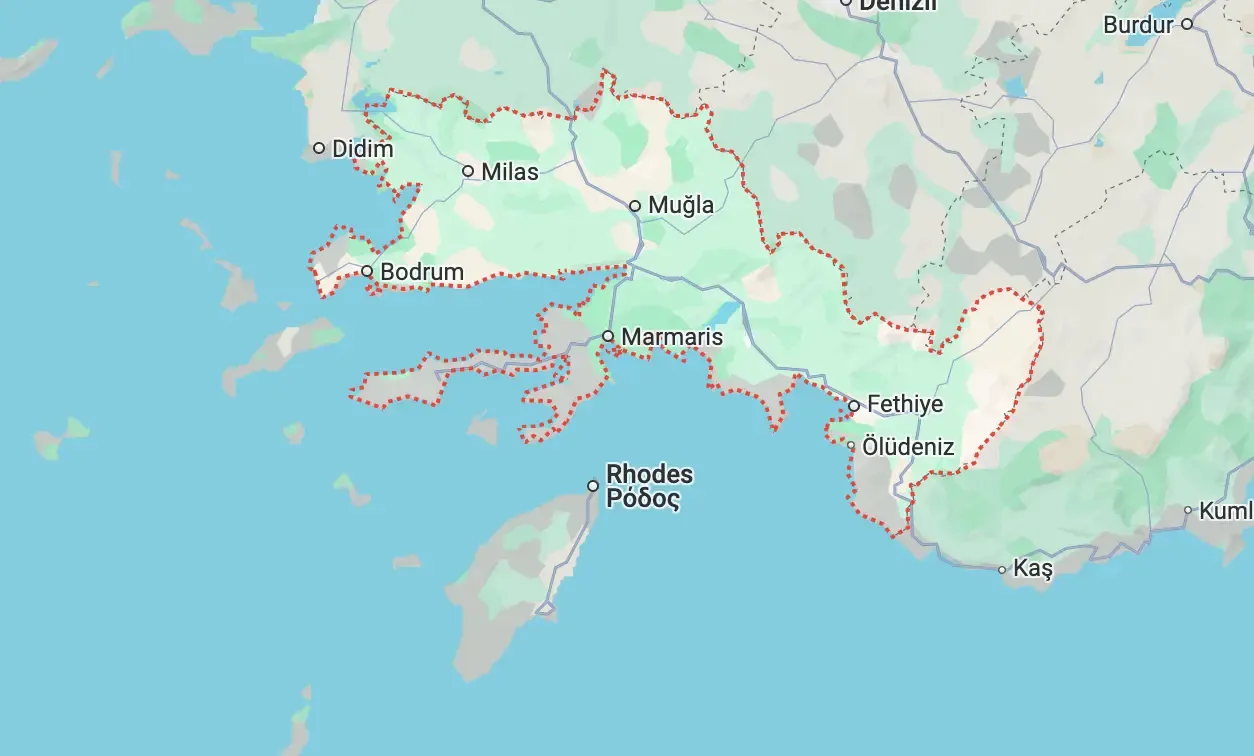
Getting to Muğla

As one of the Aegean's premier holiday destinations, Muğla is easily accessible from all corners of the world thanks to its two international airports, well-maintained highway networks, and strong regional transit links.
Arriving by Air
Reaching Muğla by air is exceptionally convenient via two active airports situated on opposite ends of the province:
Dalaman Airport (DLM): Serves the southern coastal districts, including Fethiye, Marmaris, Göcek, and Dalyan (Ortaca). It receives frequent year-round domestic flights from Istanbul, Ankara, and Izmir, as well as extensive international charters. Comparing Dalaman flights and renting a car via Yolcu360 allows you to explore the turquoise coast on your own itinerary.
Milas–Bodrum Airport (BJV): Serves the northern peninsula, including Bodrum, Milas, and Datça. It features heavy international and domestic flight traffic, especially during the summer holiday season. You can easily compare carriers on Yolcu360 to find budget-friendly flights into Bodrum.
Upon landing, you can reach your final destination via airport shuttles (HAVAŞ/MUTTAŞ), private VIP transfers, taxis, or rental cars.
Pro Tip for Travelers: Renting a car directly at either airport is by far the most comfortable choice if you plan to explore Muğla’s hidden coves, ancient ruins, and secluded beaches without depending on public bus schedules.
Driving & Bus Networks
Muğla connects smoothly to major Turkish hubs via scenic highways:
From Istanbul: 780 km (approx. 8–9 hours by car via the O-5 highway).
From Ankara: 620 km (approx. 7 hours by car via D300/D550).
From Izmir: 210 km (approx. 3 hours by car via D550).
Long-distance intercity buses operate daily to the main Muğla Bus Terminal, as well as directly to coastal hubs like Bodrum, Marmaris, and Fethiye. The D550 (Aydın-Muğla) and D400 (Antalya-Fethiye-Marmaris coastal road) serve as the primary highway arteries.
Train Connections
There is no direct railway line into Muğla province. The nearest train stations are located in neighboring Aydın and Denizli. Travelers taking the train from Izmir can transfer to an intercity bus or rental car upon reaching Aydın or Denizli.
Car Rental Recommendations
Due to Muğla's expansive geography, renting a vehicle is highly recommended. Booking early via Yolcu360 ensures competitive rates and guaranteed availability during peak season, giving you total freedom to road-trip between Akyaka, Dalyan, Ölüdeniz, and the Datça Peninsula.
What to Eat in Muğla: Local Cuisine Guide

Muğla's gastronomy seamlessly blends Egean olive oil tradition with Mediterranean seafood and Nomadic (Yörük) culinary roots, placing fresh herbs and natural ingredients at the center of every meal.
Signature Dishes
Çökertme Kebab: A famous Bodrum specialty featuring thinly sliced marinated beef served over a bed of crispy matchstick potatoes, topped with garlic yogurt and warm tomato sauce.
Keşkek: A hearty, traditional ceremonial dish made by slow-cooking wheat and tender meat together until creamy.
Sura: A festive roast lamb dish stuffed with spiced rice, pine nuts, and herbs.
Sautéed Aegean Wild Greens (Ot Kavurması): Freshly gathered wild herbs like sea samphire, chicory, and mallow sautéed gently in cold-pressed olive oil.
Black-Eyed Pea Salad (Börülce Salatası): A refreshing cold starter (meze) dressed with extra virgin olive oil, fresh lemon juice, and garlic.
Catch of the Day: Fresh sea bass, sea bream, and red mullet served daily at coastal taverns in Datça, Bodrum, and Marmaris.
Breakfast Culture
Muğla breakfasts showcase local organic farming. Table staples include rich pine honey (a specialty of Köyceğiz and Fethiye), aged goat cheeses, cured olives, homemade jams, and freshly baked flatbreads (gözleme and katmer) filled with wild herbs.
Sweets & Street Food
Datça Almond Paste: High-quality marzipan made from locally harvested Datça almonds.
Lokma: Golden, crispy fried dough spheres soaked in light syrup.
Sarı Burma: A delicate, rolled homemade pastry filled with walnuts and drizzled with melted butter.
Coastal Street Snacks: Freshly steamed stuffed mussels (midye dolma), savory herb-filled pastries, and freshly squeezed pomegranate or orange juice available along every harbor promenade.
Best Time to Visit Muğla

Muğla offers a Mediterranean climate with warm summers and mild winters, making it a viable year-round destination depending on your travel style:
Spring (March – May): Ideal for nature lovers and active travelers. Temperatures are mild, wild herbs bloom, and rivers flow strong. It is the best season for hiking the Lycian Way, kayaking down the Azmak River, and exploring the Saklıkent Gorge without summer heat.
Summer (June – August): Peak tourism season. Coastal hubs like Bodrum, Marmaris, Fethiye, Akyaka, and Datça buzz with international visitors. Perfect for beach holidays, paragliding over Ölüdeniz, boat cruises to Sedir Island (Cleopatra Beach), and enjoying vibrant open-air nightlife.
Autumn (September – November): The "golden season." Sea temperatures remain pleasantly warm while summer crowds dissipate. Excellent for quiet retreats in Datça or Bozburun, olive harvesting tours, and vineyard visits.
Winter (December – February): Winters are mild along the coast. While not suitable for swimming, it offers a peaceful atmosphere for cultural sightseeing, exploring historic Muğla city center (Menteşe), and enjoying cozy coastal dining.
Key Districts of Muğla
Bodrum: Globally renowned for luxury resorts, superyacht marinas, buzzing nightlife, and the historic Castle of St. Peter.
Marmaris: Famous for pine-forested mountains meeting turquoise bays, vibrant harbor promenades, and extensive blue-cruise sailing routes.
Fethiye: Home to the world-famous Ölüdeniz lagoon, the Butterfly Valley, and world-class tandem paragliding from Mount Babadağ.
Datça: A serene peninsula known for pristine coves, almond and olive groves, and the ancient ruins of Knidos where the Aegean meets the Mediterranean.
Dalaman: The primary air transport hub of the southern region, surrounded by natural rivers, citrus orchards, and lush countryside.
Ortaca (Dalyan): The eco-tourism heart of Muğla, featuring ancient Lycian rock tombs, the reed-lined Dalyan Canal, and the protected Caretta Caretta sea turtle nesting site at İztuzu Beach.
Milas: Rich in cultural heritage, famous for ancient Carian ruins, traditional hand-woven carpets, and expansive olive production.
Ula (Akyaka): Certified as a Cittaslow (Slow City), famous for its unique architecture, icy-cold Azmak River, and world-class kiteboarding beaches.
Köyceğiz: Centered around a tranquil lake, offering thermal mud baths, citrus groves, and peaceful nature walks.
Seydikemer: Home to dramatic natural landscapes, including the breathtaking Saklıkent Gorge and the UNESCO-listed ancient site of Letoon.
Menteşe: The inland provincial capital of Muğla, celebrated for preserved Ottoman-era houses, narrow historic streets, and authentic Aegean city life.
Yatağan: Known for inland industrial heritage and the impressive ancient city of Stratonikeia.
About Muğla

Situated in southwestern Türkiye, Muğla boasts the longest coastline of any Turkish province (over 1,100 kilometers), spanning across both the Aegean and Mediterranean seas.
Inhabited since antiquity by the Carians, Lycians, and Romans, the region is a living open-air museum. Landmarks such as the rock-cut tombs of Kaunos, the seaside ruins of Knidos, the ancient theater of Tlos, and the medieval Bodrum Castle showcase thousands of years of continuous civilization.
For adventure seekers, Muğla is an outdoor playground offering scuba diving, windsurfing, sea kayaking, mountain trekking, and tandem paragliding from the 1,900-meter peak of Mount Babadağ straight onto the sands of Ölüdeniz.