 en
enGermany Travel Guide

About Germany
| Area | 357,596 km² |
| Climate | Temperate oceanic climate |
| Currency | Euro (EUR) |
| Language | German |
| Continent | Europe |
| Elevation | 263 m |
| Time Zone | GMT+01:00 (Summer GMT+02:00) |
| Population | 84,175,985 (2025) |
| Country Code | +49 |
Germany Map
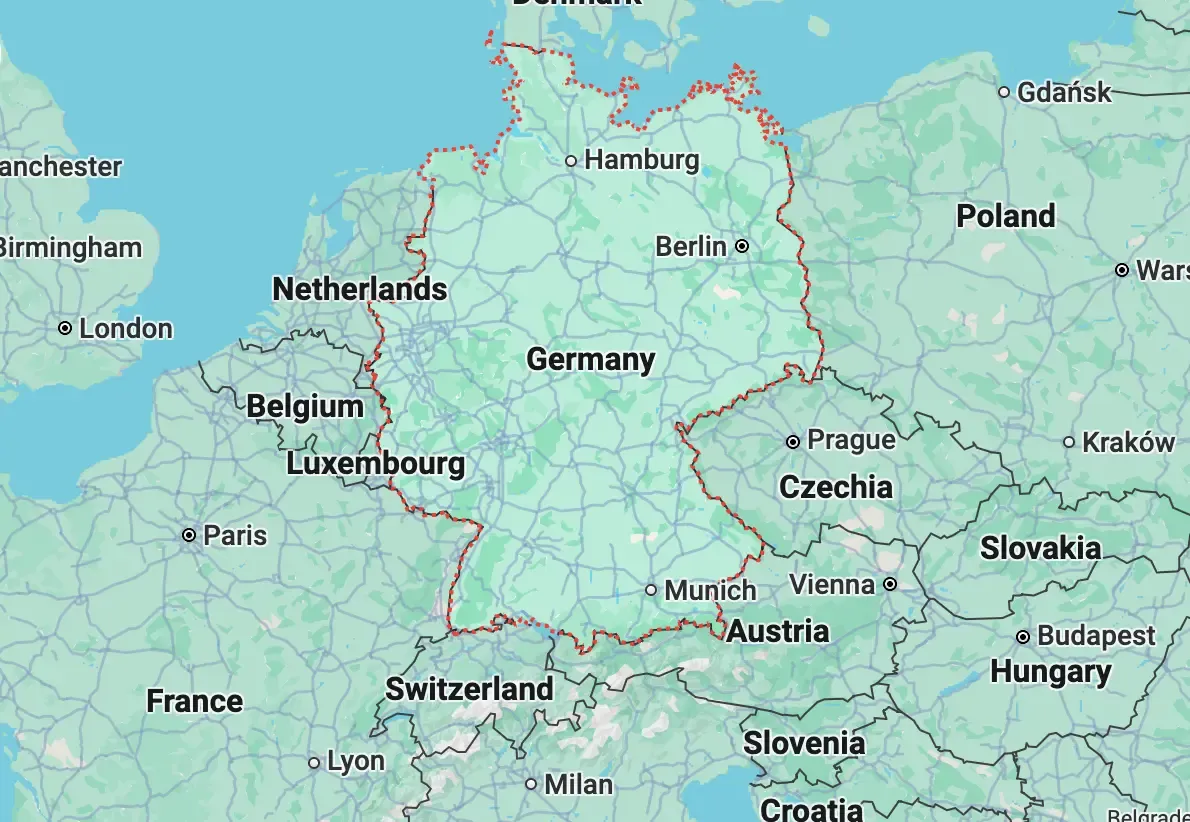
How to Get to Germany

Located in the heart of Europe, Germany is one of the continent's most visited destinations for both leisure and business travel, famous for its fairy-tale medieval towns, lush Black Forest regions, Bavarian Alps, and dynamic metropolises like Berlin. Thanks to its central geographical position, Germany serves as a major transit hub accessible from across the globe and neighboring European nations.
Travel by Air
Flying is the most practical way to reach Germany, supported by a network of modern international airports across the country:
Frankfurt Airport (FRA) & Munich Airport (MUC): The nation's largest aviation hubs and primary international gateways to Europe.
Berlin Brandenburg (BER), Düsseldorf (DUS), Cologne/Bonn (CGN) & Stuttgart (STR): Major regional gateways offering high-frequency direct flight routes and budget-friendly alternatives from international destinations.
Seamless Logistics: You can compare and secure your flight tickets to Germany on Yolcu360 in seconds. Pre-booking a rental car for airport handover allows you to bypass train schedules and taxi lines, setting off on your European itinerary immediately upon arrival.
Travel by Road and Rail
Bordering nine different countries, Germany is easily accessible by road via its famous freeway network (Autobahn). Additionally, the High-Speed Train network (ICE) operated by German Railways (Deutsche Bahn – DB) offers comfortable, scenic rail connections directly into German city centers from neighboring capitals such as Paris, Amsterdam, Zurich, and Prague.
Car Rental
Renting a car is the ideal option to tour medieval castles along the world-famous Romantic Road (Romantische Straße), navigate winding roads through the Black Forest, or stop along alpine lakes in the Bavarian Alps:
Comparison & Booking: Yolcu360 lets you compare leading global and local car rental brands to select the best vehicle rates at Frankfurt, Munich, or Berlin airports.
Vehicle Choices: Opt for a premium executive sedan for comfortable driving along speed-unrestricted Autobahn stretches, or select a high-capacity SUV for family driving through alpine terrain.
Local Cuisine & Dining in Germany

German cuisine offers a hearty gastronomic experience featuring meats, potatoes, and baked goods, with regional variations across different states. Due to the country's multicultural fabric, major urban centers like Berlin and Frankfurt also feature extensive international dining scenes, including famous local street foods like the iconic Turkish-style Döner Kebab.
Regional Highlights
Bratwurst & Currywurst: Essential street food staples across Germany. Bratwurst is a traditional grilled sausage, while Currywurst features sliced sausage topped with a spiced curry ketchup sauce, traditionally served alongside French fries.
Schnitzel: A staple of German dining consisting of a thin, breaded cutlet (pork, veal, or chicken) pan-fried in butter until golden.
Maultaschen: A Swabian specialty from southwestern Germany, featuring large pasta dumplings filled with seasoned meat, spinach, and herbs, served either in a rich broth or pan-fried.
Brezel (Pretzel): An iconic knot-shaped bakery staple especially popular in Bavaria, featuring a crisp exterior, soft interior, and coarse sea salt topping.
Sweets & Pastries
Schwarzwälder Kirschtorte (Black Forest Cake): Germany's famous dessert layer cake made with chocolate sponge cake, fresh sour cherries, cherry spirit (Kirschwasser), and whipped cream.
Apfelstrudel (Apple Strudel): A traditional baked pastry filled with spiced apple slices, cinnamon, and raisins, typically served warm with vanilla sauce or ice cream.
Best Time to Visit Germany

Germany experiences a temperate seasonal climate. Travel planning often aligns with major seasonal events and regional festivals:
Peak Summer Season (June – August): The most vibrant period for outdoor exploration, with temperatures averaging 20–25°C (68–77°F). Ideal for Rhine River cruises, outdoor beer garden dining in Munich, and hiking in the Alps.
Oktoberfest (Late September – Early October): The world's largest traditional fair, held annually in Munich. Millions of visitors attend wearing regional attire (Lederhosen and Dirndl). Accommodations and flights across Bavaria sell out months in advance, making early booking essential.
Christmas Markets (Late November – December): Germany is the birthplace of the traditional Christmas market (Weihnachtsmarkt). Historic town squares in Nuremberg, Cologne, and Dresden feature festive lighting, spiced mulled wine (Glühwein), and gingerbread (Lebkuchen), marking a peak winter tourism season.
Shoulder Seasons (Spring & Autumn): April to May brings spring blossoms, while late October to November displays autumn foliage across the Black Forest. Traveling during these shoulder months avoids peak crowds and offers more economical flight and rental car options.
Overview of Germany's Regions & Federal States

Germany comprises 16 federal states (Bundesländer), each featuring distinct regional traditions, landscapes, and urban centers:
Federal State / Region | Key Cities | Major Highlights & Characteristics | Primary Airport(s) |
Bavaria | Munich, Nuremberg | Neuschwanstein Castle, Alpine peaks, Oktoberfest, traditional Bavarian culture. | Munich (MUC) |
Berlin (Capital Region) | Berlin | Brandenburg Gate, Berlin Wall remnants (East Side Gallery), Museum Island, nightlife. | Berlin Brandenburg (BER) |
North Rhine-Westphalia | Cologne, Düsseldorf | Gothic Cologne Cathedral, Rhine promenades, trade fair centers, dense urban hub. | Düsseldorf (DUS), Cologne/Bonn (CGN) |
Hesse | Frankfurt | European financial hub, futuristic skyline, River Main, Goethe's birthplace. | Frankfurt (FRA) |
Hamburg & North Coast | Hamburg | Maritime port heritage, historic brick warehouse district (Speicherstadt), Elbphilharmonie. | Hamburg (HAM) |
Baden-Württemberg | Stuttgart, Baden-Baden | Black Forest nature trails, luxury thermal spas, Mercedes-Benz and Porsche museums. | Stuttgart (STR) |
Characteristic Regional Experiences
History & Culture in Berlin: Explore street art installations, historic landmarks, and world-class exhibits on Museum Island across Europe's cultural capital.
Fairy-Tale Castles on the Romantic Road: Drive the scenic route from Würzburg to the Alps, visiting medieval towns like Rothenburg ob der Tauber and Neuschwanstein Castle.
Nature in the Black Forest: Hike through dense evergreen forests, visit historic cuckoo clock workshops, and relax in natural thermal spa towns.
Automotive Engineering in Stuttgart & Munich: Automotive enthusiasts can visit the Mercedes-Benz, Porsche, and BMW museums to experience modern vehicle design and engineering heritage.
📌 Driving & Environmental Rules: When driving a rental car on Germany's Autobahn, note that the left lane is strictly reserved for passing and cannot be occupied continuously. Additionally, most German city centers operate designated Low Emission Zones (Umweltzone); ensure your rental vehicle displays a green environmental badge (Umweltplakette) on the windshield for city center access.